
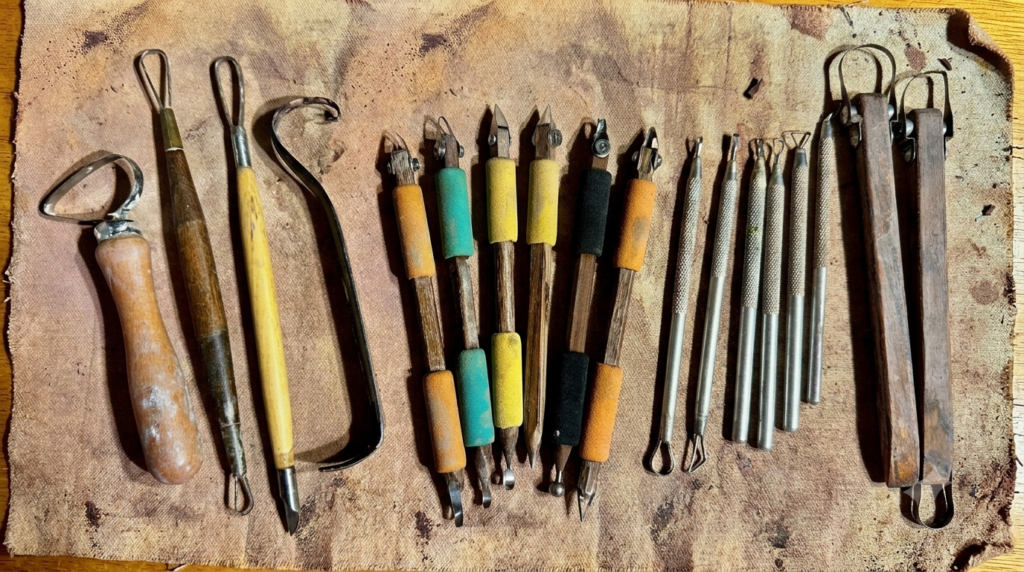
Stepping into a pottery studio for the first time can feel both thrilling and overwhelming. Shelves are lined with unusual instruments, wooden ribs, metal loops, and sponges of all shapes and sizes. But here is the secret every experienced potter knows: you don’t need a massive collection of equipment to start creating beautiful ceramics.
A standard beginner’s pottery toolkit contains a handful of simple, versatile tools that form the foundation of almost every project. Whether you’re learning hand-building or trying your hand at the wheel, here are the essential pottery tools every beginner should get to know.
1. The Pottery Sponge
It may look humble, but a good quality hydra or pottery sponge is your single most valuable companion.
What it’s for: Sponges manage water levels on your clay. During wheel throwing, clay needs constant moisture to lubricate your movement; a sponge held in your palm slowly releases water right where you need it.
Pro-Tip: Beyond wetting clay, a slightly damp sponge is ideal for smoothing rough edges and rims on finished pieces before they dry completely.
2. Wire Clay Cutter
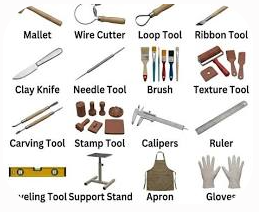
A simple strand of high-tensile wire attached to two comfortable wooden toggles or handles.
What it’s for: The wire cutter serves two crucial purposes. First, it slices off workable blocks of raw clay from larger bags or blocks. Second, once you complete a piece on the wheel, you slide the wire flat across the bat surface to slice the pot clean off the wheel head.
Pro-Tip: Keep the wire taut between both hands when pulling through clay to make clean, straight cuts.
3. Pottery Needle Tool
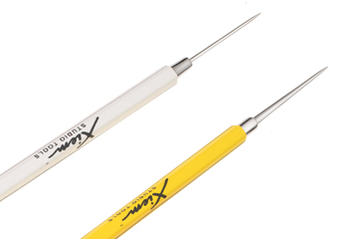
Consisting of a sharp metal needle fixed into a wooden or metal handle, this is one of the most precise instruments in your toolkit.
What it’s for: Needle tools are used for scoring (hatching fine grooves in clay to join pieces), measuring the depth of a pot base, trimming uneven top rims while throwing, and fine-line carving into leather-hard clay surfaces.
4. Wooden and Rubber Ribs
Ribs are flat, kidney-shaped plates made of wood, soft rubber, or thin steel.
What it’s for:
Wooden Ribs: Ideal for shaping walls on the wheel, compressing bottom surfaces to prevent cracks, and scraping excess clay off bats.
Flexible Rubber Ribs: Perfect for smoothing hand-built slabs and removing finger marks without altering the underlying shape of your piece.
5. Loop and Ribbon Tools
These tools feature flattened metal loops fixed to wooden handles, available in a variety of teardrop, circular, and square shapes.
What it’s for: Loop tools are designed specifically for trimming away leather-hard clay. When turning a bowl upside down on the wheel during the trimming stage, loop tools carve out a crisp, professional foot ring and thin down excess wall thickness.
6. Wooden Modeling Tool
Dual-ended wooden sticks featuring angled tips, flat spatulas, or curved ends.
What it’s for: Essential for hand-building! They act as extensions of your fingers, blending clay seams together in hard-to-reach places, carving decorative texture, and trimming away excess clay near the wheel base.
Caring for Your Toolkit
To ensure your tools last through countless studio sessions:
Rinse and Dry: Never leave wooden tools or metal blades submerged in standing water, as wood can swell and split while metal can rust.
Keep Organized: Wash your tools in studio wash basins at the end of every class, dry them thoroughly, and keep them together in a breathable mesh bag or caddy.